
From basic mobile applications to complex enterprise systems, cloud computing has become a crucial part of modern software development. It allows developers to build, deploy, and scale applications faster and more efficiently than ever before.
Cloud computing providers offer services such as servers, storage, databases, networking, and analytics over the internet. Instead of managing physical infrastructure, businesses can access these resources on demand, making development more cost-effective, flexible, and scalable. This also allows teams to focus on building products rather than maintaining infrastructure.
Today, cloud computing is not just a support system, it has become the foundation for building scalable, high-performance applications. Businesses rely on it to reduce infrastructure costs, improve speed, and handle growing user demand efficiently.
In this article, we’ll explore the role of cloud computing in software development, its different types, its applications across the entire development process, and its key advantages and challenges.
What is Cloud Computing?
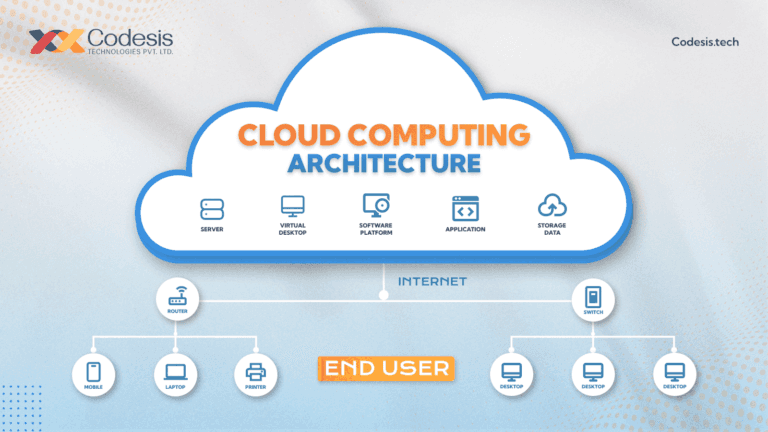
Cloud computing is the delivery of computing services such as servers, storage, databases, networking, and software over the internet. Instead of relying on physical infrastructure, businesses can access these resources on demand, paying only for what they use.
This makes it easier to build, test, and scale applications without worrying about managing hardware or infrastructure. Cloud platforms also enable faster development, better collaboration, and the flexibility to handle changing user demand efficiently.
Types of Cloud Computing
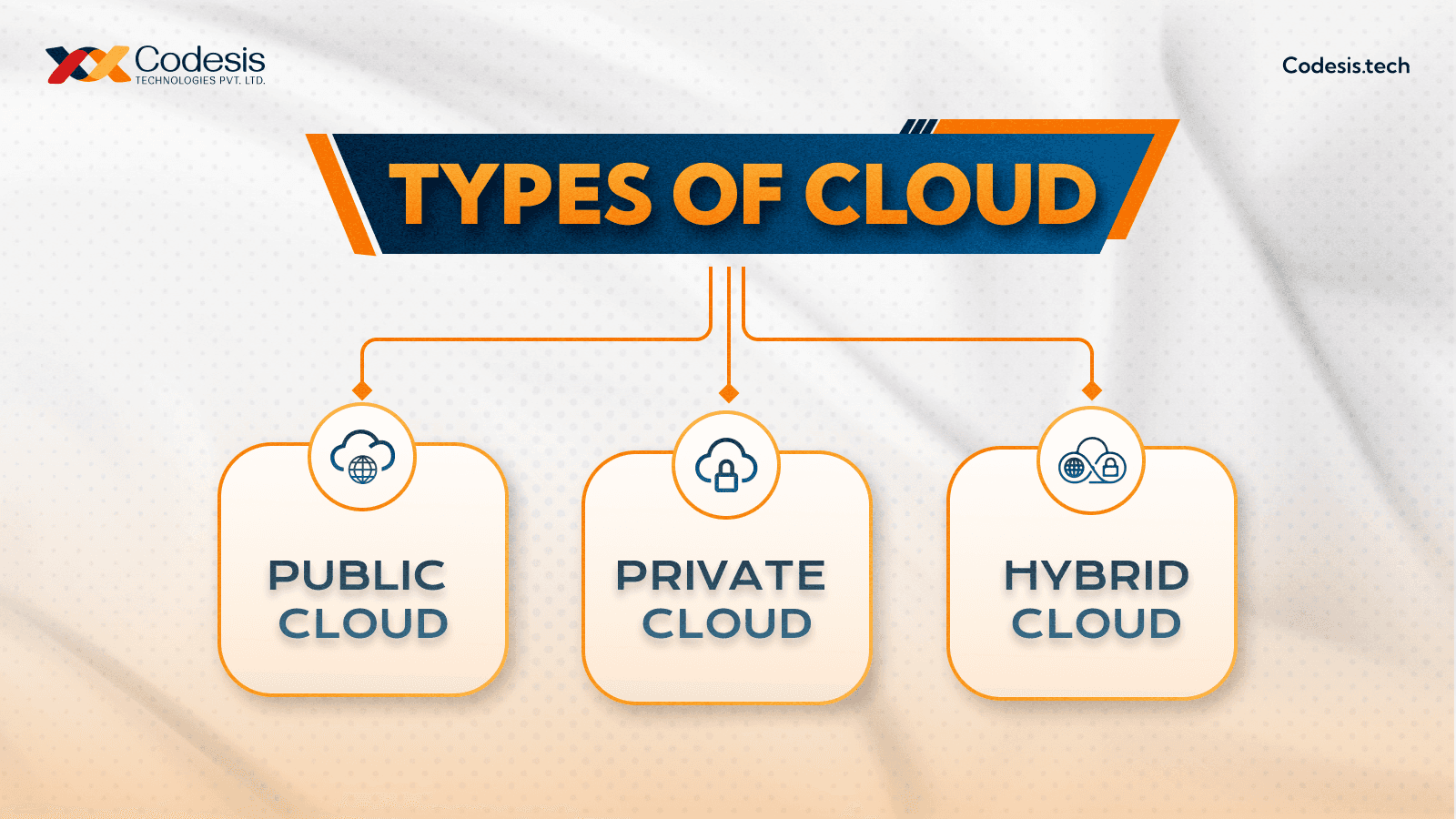
There are three main types of cloud computing: public, private, and hybrid. Each type has its own set of advantages and is suitable for different kinds of applications and business needs.
Hybrid Cloud
Public Cloud
Private Cloud
The explanation of these clouds are as follows:
Hybrid Cloud
A hybrid cloud is a combination of public and private cloud services. This allows organizations to take advantage of the scalability and cost-effectiveness of public clouds while also maintaining control over sensitive data and applications in a private cloud.
Hybrid clouds offer the best of both worlds, providing the flexibility and cost savings of public clouds with the security and control of private clouds. They are ideal for businesses that have a mix of sensitive and non-sensitive data and applications.
Public Cloud
A public cloud is a type of cloud computing where services are offered to multiple clients over the Internet. These services are owned and operated by a third-party cloud service provider, such as Amazon Web Services (AWS), Microsoft Azure, or Google Cloud Platform.
Public clouds are highly scalable and cost-effective, making them popular for small businesses and startups. They also offer a high level of reliability and can be deployed quickly, making them ideal for businesses that need to scale rapidly.
Private Cloud
A private cloud is a type of cloud computing where services are offered exclusively to a single organization. This can be hosted on-premises or by a third-party provider. Private clouds offer more control and customization options, making them a popular choice for larger organizations with specific security and compliance requirements.
They also provide a high level of performance and can be tailored to meet the specific needs of the organization, making them ideal for businesses with complex IT requirements.
How Cloud Computing is Used in Software Development
The influence of cloud computing on software development is undeniable, reshaping the entire process, from initial concepts to the final deployment. It has revolutionized the way developers operate, facilitating quicker and more efficient software creation and delivery. In this discussion,
we’ll delve into the specific applications of cloud computing in various stages of the software development lifecycle
Ideation and Planning:
In this initial phase, cloud computing tools like project management software, design, and prototyping tools, and communication platforms play a vital role. They enable teams to collaborate, track progress, create mockups, and communicate effectively, streamlining the planning process.
Having the right team structure in place is equally important to ensure smooth execution and better collaboration across different stages of development.
Development and Testing:
During this phase, developers use cloud-based development platforms and integrated development environments (IDEs) to collaborate and manage code repositories efficiently. Cloud-based IDEs provide coding, debugging, and testing capabilities, while testing tools facilitate the identification and resolution of bugs and issues.
These workflows are often guided by structured software development methodologies that ensure efficient delivery and continuous improvement. This becomes even more important in mobile application development, where systems need to handle real-time data and large user traffic efficiently.
Deployment and Maintenance:
After development and testing, cloud computing simplifies software deployment. Cloud-based deployment tools automate this process, eliminating the need for physical infrastructure. Monitoring and management tools in the cloud help developers keep track of application performance and manage resources to ensure efficient and smooth software operation.
Benefits of Cloud Computing in Software Development
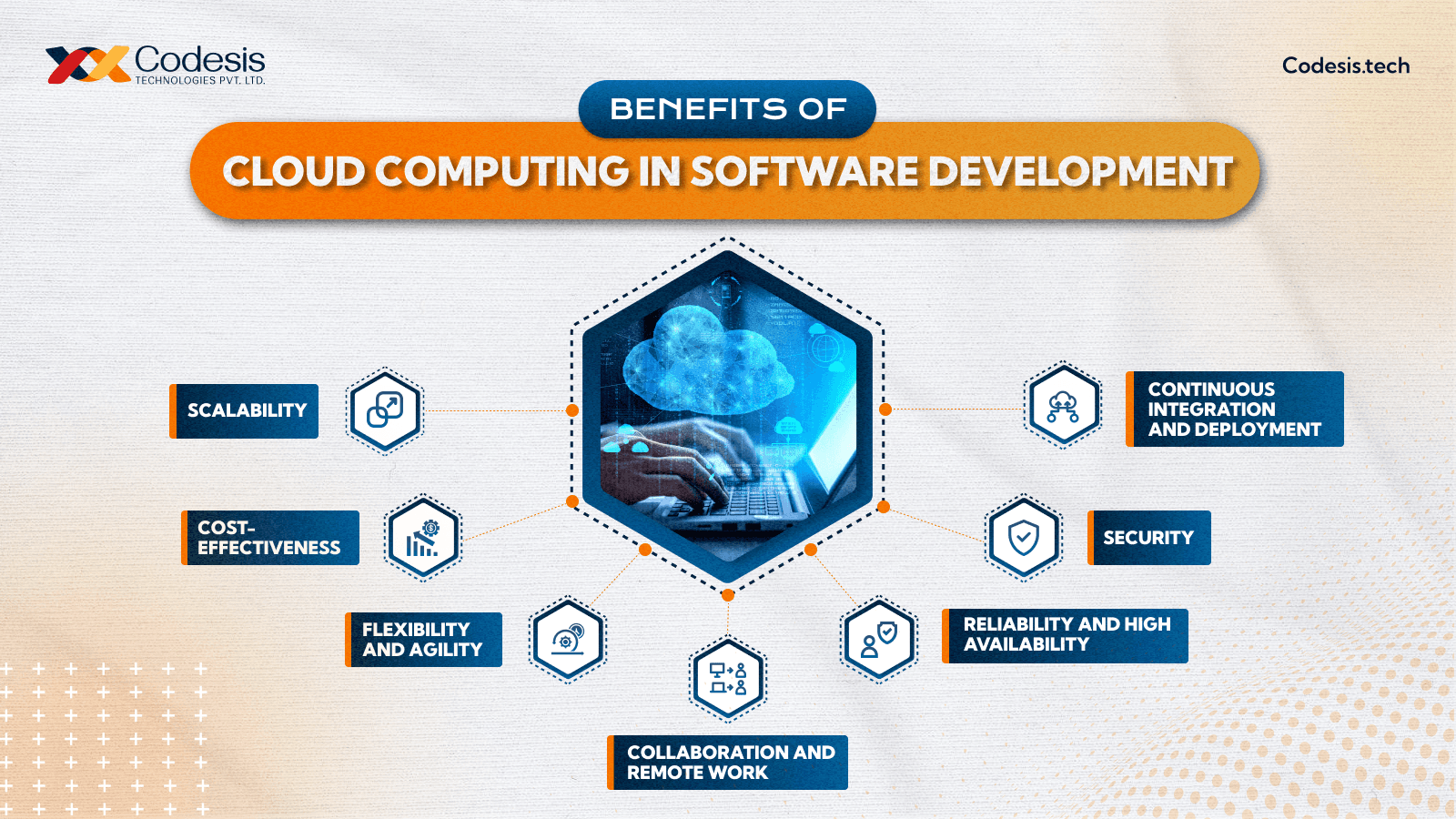
Scalability: Cloud computing allows software developers to easily scale their applications based on demand. They can quickly allocate or release computing resources such as storage, processing power, and memory, ensuring that the application can handle varying workloads efficiently. This eliminates the need for upfront infrastructure investment and enables developers to accommodate increased user demand without disruptions.
Cost-effectiveness: Cloud computing eliminates the need for upfront hardware investment. Developers only pay for the resources they use, reducing costs associated with hardware provisioning, maintenance, and upgrades. This allows small- and medium-sized businesses to access enterprise-level infrastructure without significant upfront expenses.
Flexibility and Agility: Cloud platforms offer a wide range of programming languages, development platforms, and tools. Developers can easily experiment with new technologies and frameworks without the need for local installations. Integrated development environments (IDEs) and development tools simplify coding, testing, and deployment processes, enabling faster application development and deployment cycles.
Collaboration and Remote Work: Cloud computing facilitates effective collaboration among remote teams. Developers can work simultaneously on the same codebase, track changes, and resolve conflicts in real time. Cloud-based version control systems and project management tools allow seamless collaboration across geographically dispersed teams.
Reliability and High Availability: Cloud service providers offer robust infrastructure with built-in redundancy and failover mechanisms. This ensures high availability of software applications, even in the face of hardware or network failures. Automated backup and disaster recovery options prevent data loss and minimize downtime.
Security: Cloud computing providers invest heavily in security measures to protect data and applications. Many modern systems also rely on advanced data analysis techniques powered by AI to process large volumes of information and generate meaningful insights.
They implement advanced encryption, access controls, and monitoring systems to ensure the confidentiality, integrity, and availability of software systems. Cloud platforms also comply with industry-standard security regulations, making it easier for developers to meet compliance requirements.Continuous Integration and Deployment: Cloud-based development platforms support continuous integration and deployment (CI/CD) pipelines. Developers can automate the build, testing, and deployment processes, enabling faster and more frequent releases. This accelerates time to market and improves software quality by detecting and fixing issues early in the development lifecycle.
Challenges of Cloud Computing in Software Development
While cloud computing offers many benefits, it also presents some challenges for software development teams. These include:
Security: Storing sensitive data and applications in the cloud can pose security risks if not properly managed and secured. Businesses need to ensure they have robust security measures in place to protect their data and applications from cyber threats.
Reliability: Relying on a third-party cloud service provider means that developers are dependent on their infrastructure and services, which may experience downtime or disruptions. Businesses need to ensure they choose a reliable cloud service provider and have contingency plans in place to deal with any potential disruptions.
Vendor lock-in: Moving from one cloud service provider to another can be challenging and costly, making it difficult for developers to switch providers if needed. Businesses need to carefully consider their choice of cloud service provider and ensure they are not locked into a contract that does not meet their needs.
Cloud Computing Case Studies: Real-World Examples:
To further illustrate the benefits of cloud computing in software development, let’s explore a few real-world case studies.
Netflix:
Netflix, a global streaming giant, relies heavily on cloud computing. They use Amazon Web Services (AWS) to manage their massive library of content and deliver it to users worldwide. This scalability ensures smooth streaming experiences for millions of subscribers, and it allows Netflix to adapt to changing demands quickly.
NASA:
Even organizations like NASA have embraced cloud computing. They utilize cloud platforms to process and analyze vast amounts of data, enabling groundbreaking discoveries and space exploration.
These case studies emphasize how cloud computing empowers organizations, from tech giants like Netflix to institutions at the forefront of scientific exploration like NASA.
Expert Perspective
Cloud computing has changed how software is built, but the real advantage comes from how it is used, not just adopting it. Many businesses move to the cloud expecting instant results, but without the right architecture and planning, they often face performance and cost issues.
In practice, successful cloud-based systems are designed with scalability and flexibility from the beginning. Teams that focus on efficient resource usage, proper deployment strategies, and continuous monitoring are able to get the most value from cloud platforms.
At Codesis Technologies, the focus is on building cloud systems that are not just scalable, but also reliable and cost-efficient, ensuring long-term performance as businesses grow.
Conclusion:
Cloud computing has become the engine behind modern software development, providing developers with the tools and resources they need to build and deploy software faster and more efficiently. From ideation to deployment, cloud computing plays a crucial role in the software development process, offering numerous benefits such as cost-effectiveness, scalability, and flexibility.
However, it also presents some challenges, such as security and vendor lock-in, that developers must be aware of and address. As the demand for software continues to grow, the use of cloud computing in software development will only continue to increase, making it an essential skill for developers to have in today’s digital landscape.
Building such scalable systems often requires working with experienced teams that can design and develop solutions tailored to business needs.
If you're planning to build or scale a cloud-based application, you can connect with our team to explore the right approach.